Korean Cosmetics: Child Safety Compliance
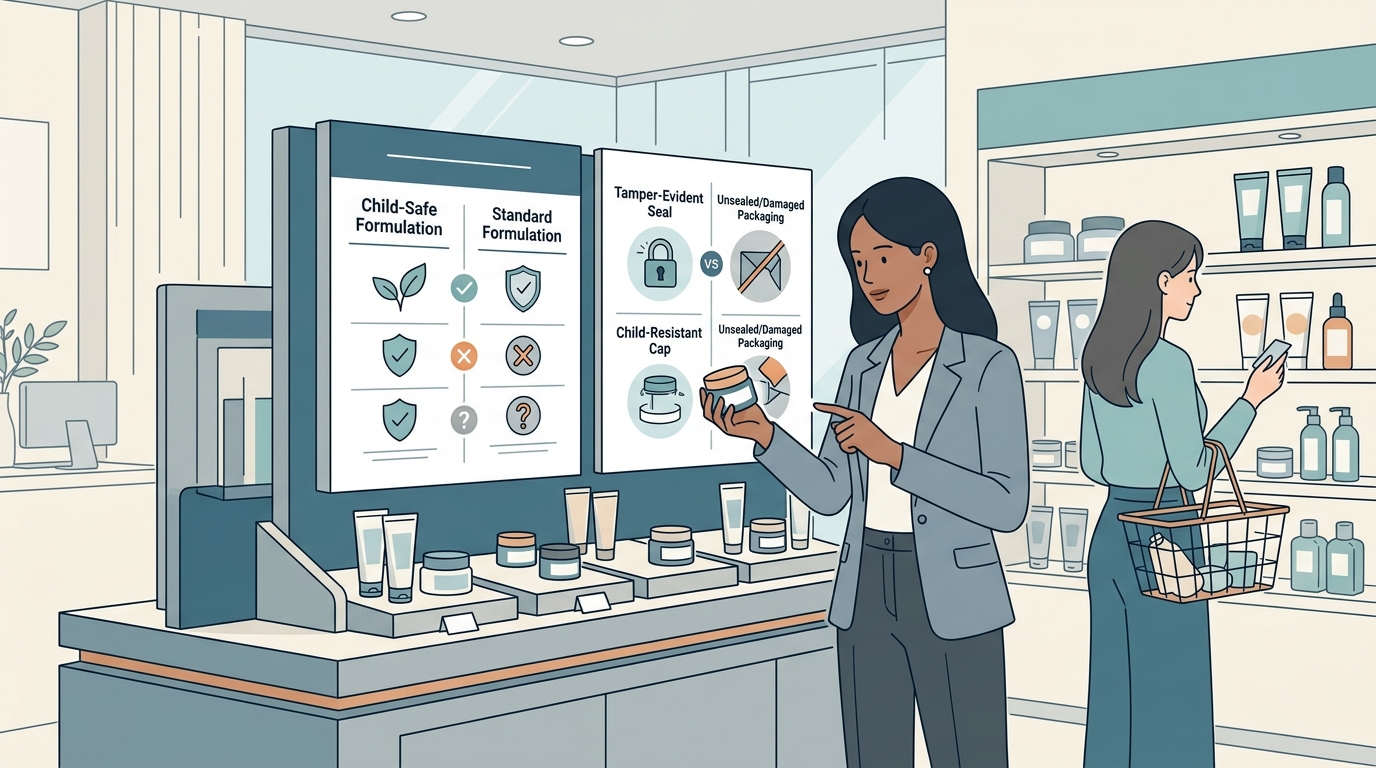
Foreign cosmetics groups selling into South Korea should treat children’s products as a documentation-sensitive category, not simply a marketing segment. The practical issue is less about broad child-focused claims and more about whether product files, labeling architecture, and ingredient governance can withstand scrutiny under the Korean cosmetics framework as compliance expectations continue to evolve.
Child-directed cosmetics in South Korea require a tighter evidence model than standard brand positioning
The immediate strategic implication is that any product aimed at infants or children should be managed as a higher-control SKU within the broader cosmetics portfolio. Under the framework indicated by the Ministry of Government Legislation, cosmetics are defined as products applied, rubbed, or sprayed on the human body for cleansing, beautifying, or maintaining or improving skin or hair health, excluding drugs. That definition matters for foreign operators because it sets the boundary for which products fall into the cosmetics regime rather than a pharmaceutical pathway.
Within that regime, outer-pack disclosure is not optional in principle. The Ministry of Government Legislation indicates that the Cosmetics Act requires certain information to be stated or displayed on the outer packaging of cosmetics. In parallel, the Ministry of Food and Drug Safety indicates that Korean cosmetics labeling is required to include specified information such as the product name, batch number, expiration date or period-after-opening, net content, manufacturer or responsible distributor name and address, ingredient names, and other items designated by Prime Ministerial Decree.
For children’s products, the more consequential issue is evidentiary depth. The Ministry of Food and Drug Safety has issued a rule specifically governing the preparation and retention of safety data for cosmetics used by infants or children. For multinational brand owners, that shifts the compliance burden from label drafting alone to product-file discipline. A child-directed line may therefore need substantiation materials and retention practices robust enough to support the product’s placement in this category, even where the law does not create a separate child-only advertising code in the material available here.
The operational lesson is straightforward: companies should avoid treating children’s cosmetics as a mere extension of general skincare merchandising. Instead, they should be ring-fenced for enhanced document control, tighter packaging review, and closer coordination between regulatory, legal, and local distribution teams. That is especially important for foreign firms using regional artwork or centralized labeling templates, because Korean requirements may not map neatly onto a global pack copy system.
Nanomaterial labeling and amendment planning create a portfolio triage issue
The next strategic pressure point is ingredient classification. The Ministry of Food and Drug Safety indicates that, for cosmetics containing nanomaterials, the relevant ingredient name must be labeled with “[nano]” and supporting documentation for that labeling must be kept. For portfolio managers, this is not only a packaging issue but also a formulation intelligence issue: if internal ingredient records are incomplete, the business may struggle to determine which SKUs require Korean-specific relabeling and which supporting files must be maintained.
The Ministry of Food and Drug Safety indicates that the amended Cosmetics Act defines a nanomaterial as a substance in which at least 50% of particles have one or more external dimensions between 1 nm and 100 nm. For management teams, that point reinforces the need for disciplined internal classification, careful label review, and consistent supporting records across affected products. Products marketed for sensitive users, including children, should not be treated as outside that review logic simply because the commercial positioning differs.
Timing remains strategically relevant because the Ministry of Government Legislation indicates that an amended Cosmetics Act is scheduled to take effect on 2026-10-08. Rather than relying on late-stage adjustments, companies should view the amendment pathway as a signal to organize portfolio review, artwork governance, and supporting documentation as a coordinated compliance program.
For foreign operators, this is where local implementation capability becomes decisive. Navigating Korean compliance calendars, packaging localization, and distributor-side execution often requires specialized local coordination, which firms like KOISRA provide to overseas entrants managing market entry or regulatory adaptation in South Korea.
Strategic takeaways for foreign cosmetics operators managing Korean child-product exposure
- Segment children’s cosmetics as a controlled compliance class. Products intended for infants or children should be managed with dedicated product-file governance because the Ministry of Food and Drug Safety has issued a rule on preparing and retaining safety data for that category.
- Audit outer-pack architecture before commercialization pressure rises. Korean cosmetics labeling may need to reflect specified items including product identity, batch traceability, expiry or period-after-opening, net content, responsible company details, ingredients, and additional decree-based items, so regional artwork should be reviewed before production commitments are locked.
- Run a nanomaterial screen across the full portfolio. Any SKU with a potential nanomaterial profile should be assessed against the Ministry of Food and Drug Safety framework and checked for “[nano]” labeling implications, with supporting documentation retained in a retrievable format.
- Use amendment planning as a cross-functional readiness exercise. With the Ministry of Government Legislation indicating a scheduled effective date of 2026-10-08 for the amended Cosmetics Act, companies should sequence formulation review, label revision, inventory planning, and distributor alignment as one integrated workstream.
- Avoid unsupported child-safety positioning. The stronger legal posture is to anchor children’s products in documented safety-data retention and compliant labeling rather than making expansive claims that imply blanket safety or approval for all children.
Disclaimer: The information provided in this article is for general informational purposes only and does not constitute legal, financial, or professional advice. Regulations and procedures in South Korea are subject to change. Please consult with certified professionals or contact us directly regarding your specific situation.